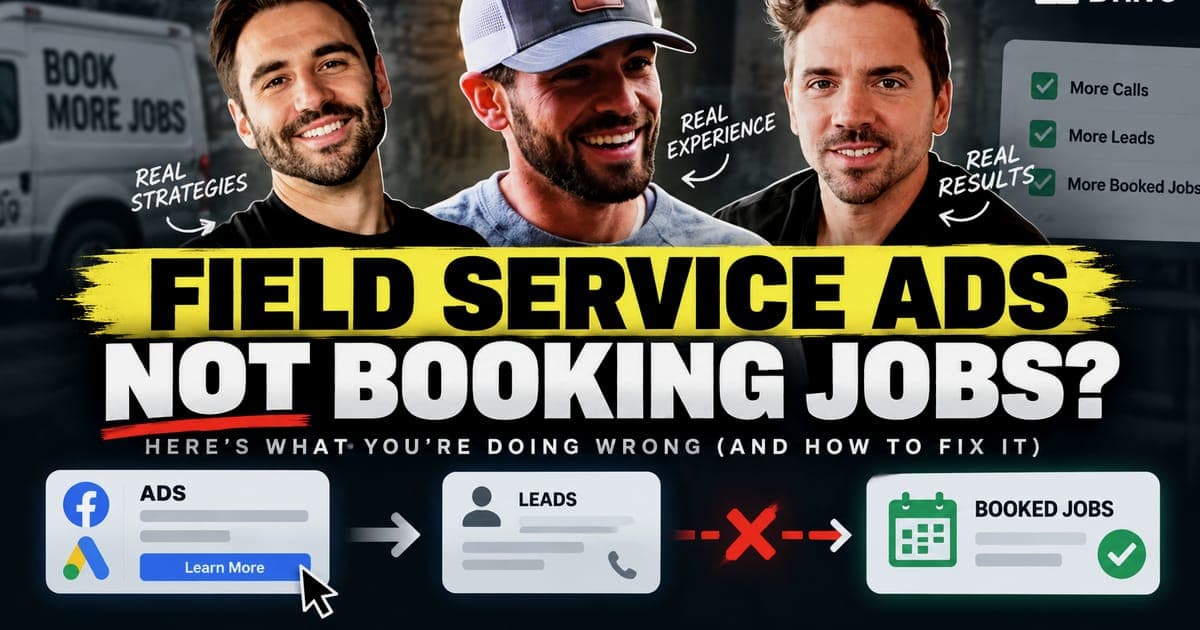
Round Robin Lead Distribution Is Killing Your Home Service Sales


If you're running a home service business and still using round robin lead distribution, you're handing opportunities to your competitors on a silver platter. While it might feel like the 'fair' way to distribute leads among your sales team, the harsh reality is that round robin scheduling is actively damaging your bottom line—and here's why.
The Fatal Flaw of Round Robin: Fairness Over Results
Round robin lead distribution operates on a simple principle: every sales representative gets an equal number of leads in rotation. On paper, this seems equitable. Your team feels like everyone's getting a fair shot, and there's no favoritism in lead assignment. But here's the problem—your customers don't care about your internal fairness metrics.
When a homeowner reaches out for HVAC repair, plumbing service, or electrical work, they're not thinking about your sales team's rotation schedule. They want service NOW. They're comparing response times, and the first company that can get someone to their door quickly wins the business. Period.
Round robin doesn't account for availability, location, or urgency. It just assigns the next person in line—even if they're booked solid for three days, live an hour away from the customer, or are in the middle of another appointment. Meanwhile, your competitor with smart scheduling gets there in 90 minutes and closes the deal.
Speed to Lead: The Only Metric That Really Matters
In the home service industry, speed to lead is everything. Research consistently shows that companies responding to inquiries within 5 minutes are 100 times more likely to convert leads than those waiting 30 minutes or longer. Yet round robin scheduling systematically creates delays by assigning leads to unavailable sales reps who can't respond immediately, routing customers to reps who are geographically far from the service location, creating bottlenecks when your 'next in rotation' person is already overbooked, and allowing qualified leads to go cold while waiting for callback.
Every minute of delay is an opportunity for your competition to swoop in. In today's on-demand economy, homeowners have been conditioned by Amazon, Uber, and DoorDash to expect instant gratification. When they need a service, they want it scheduled immediately—not whenever your round robin rotation decides it's convenient.
The Modern Alternative: Intelligent Automated Booking
So what's the solution? Automated booking systems that prioritize availability and proximity over artificial fairness. Instead of forcing leads into a rotation queue, modern scheduling platforms automatically book appointments with whoever can serve the customer fastest.
Availability-Based Assignment: The system checks real-time availability across your entire sales team and assigns the lead to someone who can respond immediately. If your top performer is available now while another rep is booked until Thursday, the available person gets the lead. This ensures zero delay in customer response. The result? No more dead leads sitting in someone's queue. No more frustrated homeowners waiting for callbacks. Every qualified prospect gets immediate attention from someone ready to book them.
Proximity-Based Routing: Smart scheduling systems use service area mapping to route leads to the rep closest to the customer's location. This minimizes travel time, which means faster in-home appointments that beat competitors to the door, lower fuel costs and reduced vehicle wear, more appointments per day per sales rep, and better work-life balance for your team with less windshield time. When your plumber lives 10 minutes from a lead while your round robin 'next up' person is 45 minutes away, the choice is obvious—except round robin doesn't make that choice. Automated systems do.
Instant Booking, Zero Dead Leads: Perhaps the biggest advantage of automated booking is the elimination of dead leads—those prospects who reach out, never get a timely response, and end up hiring someone else. With round robin, dead leads are inevitable. Someone's always waiting for the next available slot in the rotation. Automated systems ensure every lead gets booked instantly with whoever can serve them best. No waiting, no queue, no lost opportunities. Just immediate appointment scheduling that captures revenue before competitors even know the opportunity exists.
But What About Sales Team Morale?
The most common objection to moving away from round robin is concern about fairness and sales team morale. 'Won't my reps get upset if they're not getting equal leads?' The short answer: high performers love it, and that's who you want to keep.
Here's the reality: round robin rewards mediocrity. Your best salespeople—the ones closing 70% of their appointments—get the same number of leads as underperformers closing 30%. That's not fair; it's wasteful.
With availability-based assignment, your top performers naturally get more opportunities because they close deals faster, freeing up availability for more appointments. They make themselves available more consistently. They show up prepared and ready to book, which the system recognizes. This creates a meritocracy where results matter more than rotation.
Your high performers earn more because they're better at their jobs. Your underperformers either improve to compete or self-select out. And your business wins because more leads are handled by people who actually close them. As for morale? Your best salespeople will love the new system because they're no longer held back by artificial rotation limits. They can take as many appointments as they can handle, maximizing their earning potential while delivering exceptional customer service.
The On-Demand Economy Demands On-Demand Booking
We live in an age of instant gratification. Homeowners expect the same convenience from their HVAC company, plumber, or electrician that they get from ordering dinner or booking a ride. When they search 'emergency plumber near me' at 10 PM on a Saturday, they want someone available NOW—not Monday morning when your round robin rotation decides it's their turn.
Consider this scenario: A homeowner's water heater fails on Friday evening. They contact three companies. Company A uses round robin: 'Thanks for contacting us! The next available rep will call you back within 24 hours to schedule an appointment.' Company B uses manual scheduling: 'Let me check our schedule and call you back tomorrow morning.' Company C uses automated booking: 'I can have someone there tonight at 8 PM or tomorrow morning at 7 AM. Which works better for you?'
Which company gets the business? The one that can accommodate the customer's urgency. Every. Single. Time.
The Cost of Waiting: Real Numbers Behind Round Robin Failure
Let's talk about what round robin scheduling is actually costing your business. Assume your home service company generates 100 qualified leads per month with an average job value of $500.
With Round Robin: Average response time of 4–6 hours. Lead conversion rate of 25–30% (industry average for slow response). Approximately 27 appointments booked per month. Monthly revenue of $13,500.
With Automated Availability-Based Booking: Average response time under 5 minutes. Lead conversion rate of 55–65% (fast response plus immediate booking). Approximately 60 appointments booked per month. Monthly revenue of $30,000.
That's an additional $16,500 per month in revenue—$198,000 annually—from the exact same lead volume, simply by responding faster and booking more efficiently. And this doesn't even account for the operational savings from reduced travel time, fewer missed appointments, and higher customer satisfaction leading to referrals. The ROI is undeniable.
Building Trust Through Speed: Why First Contact Matters
Beyond the numbers, there's a psychological factor at play. When a homeowner contacts your business and gets an immediate, helpful response, you've already started building trust. You've demonstrated that you value their time and urgency, you're organized and professional, you have the capacity to serve them quickly, and you're technologically sophisticated—which suggests quality service.
This positive first impression carries through the entire customer relationship. Before your technician even arrives, the homeowner is already predisposed to trust your company and value your recommendations.
Contrast this with round robin, where the customer's first experience is waiting. Waiting for a callback. Waiting for someone to check availability. Waiting to find out if you can even help them. That's not building trust; it's creating anxiety and doubt.
Implementation: Making the Switch in 2026
If you're convinced that round robin is hurting your business, the next question is: how do you make the transition? Here's a roadmap.
Step 1: Audit Your Current Lead Flow. Before changing systems, understand your baseline metrics: average time from lead submission to first contact, lead-to-appointment conversion rate, number of dead leads (never contacted or lost to competitors), average drive time to appointments, and revenue per lead.
Step 2: Define Service Areas and Availability Rules. Map out your service territories and assign reps to specific geographic zones. Then establish clear availability guidelines that feed into your automated system. This ensures the right person gets routed to the right location at the right time. Modern booking platforms make this easy with built-in mapping tools and calendar integration. Your reps update their availability in real-time, and the system handles the rest.
Step 3: Communicate Changes to Your Team. Change management is critical. Your sales team needs to understand why you're making the change (faster response means more revenue for everyone), how the new system works, what's expected of them (maintaining accurate availability, responding promptly), and how compensation might change if moving to performance-based incentives. Frame it as an opportunity rather than a threat. High performers will earn more. The company will close more deals. Customers will be happier. Everyone wins except competitors.
Step 4: Implement with a Pilot Program. Rather than switching everything overnight, consider a pilot program. Start with emergency calls where speed matters most. Roll out to one geographic region first. Test with your most tech-savvy sales reps. Measure results over 30–60 days before full implementation. This allows you to work out kinks, gather feedback, and build internal case studies showing improved results.
Step 5: Measure, Optimize, and Scale. Once implemented, track everything: response time improvements, conversion rate increases, reduction in dead leads, revenue per rep improvements, customer satisfaction scores, and team adoption and satisfaction. Use this data to continuously refine your approach. The beauty of automated systems is their flexibility—you can test, learn, and optimize continuously.
Real-World Results: What Companies Are Seeing
Home service companies—like Custom Blinds and Design—that have ditched round robin for intelligent automated booking are reporting transformative results: 50–100% increase in lead-to-appointment conversion rates, 80–90% reduction in dead leads, 30–40% more appointments booked per month with the same lead volume, 25% reduction in average drive time to appointments, significant improvements in customer satisfaction and online reviews, and higher retention of top sales performers who thrive in merit-based systems.
The pattern is consistent across HVAC, plumbing, electrical, and other home service industries: companies that prioritize speed and availability over artificial fairness dramatically outperform those stuck in round robin rotation.
The Competitive Landscape in 2026 and Beyond
Here's the uncomfortable truth: your competitors are reading this same analysis. Some are already implementing automated booking systems. Others will make the switch in the coming months. The question isn't whether the home service industry will move away from round robin—it's whether you'll be an early adopter or a late follower.
Early adopters capture disproportionate market share. When you're the only company in your market offering instant booking and sub-5-minute response times, you become the obvious choice for homeowners. You build reputation as the responsive, professional, technologically advanced provider.
Late followers, on the other hand, struggle. Once customers experience instant booking from your competitors, they'll expect it from everyone. At that point, you're not gaining an advantage—you're just catching up to table stakes. You've lost months or years of potential market share growth.
The window of opportunity is now. In 2026, homeowner expectations for instant service are higher than ever. Companies that can deliver on that expectation will dominate. Those that can't will struggle to compete.
The Bottom Line: Fairness vs. Results
Round robin scheduling feels fair. It makes your sales team happy because everyone gets the same number of leads. But 'fair' doesn't pay the bills, and it certainly doesn't win in competitive markets.
What matters is results: more qualified appointments, faster response times, higher conversion rates, and ultimately, more revenue. Automated, availability-based booking delivers all of this by prioritizing what actually matters—getting to the customer quickly.
Your competitors are making this shift. Homeowners are demanding instant service. The technology exists and is proven to work. The only question is whether you'll make 2026 the year you level up your booking and eliminate dead leads, or whether you'll cling to outdated 'fairness' while watching market share slip away.
The choice is yours. But remember: in today's on-demand economy, speed wins. And round robin is anything but fast.
Key Takeaways
Round robin prioritizes internal fairness over customer speed—costing you deals. Speed to lead is the number one factor in home service sales conversion. Automated booking based on availability and proximity closes 50–100% more leads. Dead leads cost home service companies thousands in lost monthly revenue.
Modern homeowners expect instant booking—round robin can't deliver. High-performing sales reps thrive under merit-based systems. Geographic routing reduces travel time by 25% while increasing daily appointment capacity. Companies making the switch in 2026 will capture market share before competitors catch up.
Ready to transform your booking?
Join hundreds of field service teams already using Driive to win more jobs, reduce drive time, and automate their booking.